

.svg)
Sciatica Pain: What It Really Means (And Why Most People Are Misinformed)
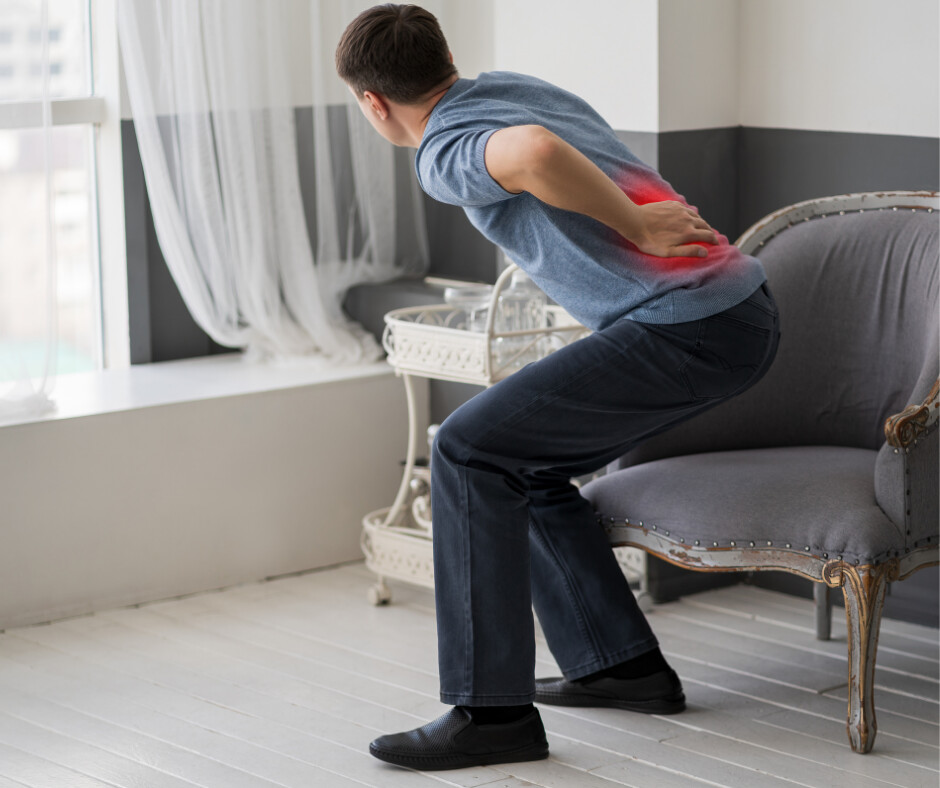
If you’ve been told you have sciatica, you’ve probably also been told at least one of the following:
- “Your nerve is pinched.”
- “Your disc is out.”
- “You should avoid bending, lifting, or twisting.”
- “This might need surgery.”
The problem?
Most of that advice is either incomplete or flat-out wrong.
“Sciatica” isn’t actually a diagnosis. It’s a catch-all term used to describe leg pain that may be coming from the spine. And when we lump different pain mechanisms together, it creates confusion, fear, and often the wrong treatment plan.
Let’s clear that up.
Sciatica Is a Description - Not a Diagnosis
Sciatica simply means pain that travels into the leg, often below the knee. But that pain can come from different sources, and each behaves differently.
In clinical practice, leg pain typically falls into one of three categories:
1. Radicular Pain
This is what most people think of when they hear “sciatica.”
Common features:
- Sharp, shooting, electric, or burning pain
- May follow a familiar nerve distribution
- Often changes quickly with posture or movement
Radicular pain comes from irritation or sensitivity of a nerve root, not necessarily damage. Importantly, it does not require the nerve to be compressed.
This is the most common form of sciatica-type pain (by a long shot) - and it tends to respond extremely well to the right kind of rehab.
2. Radiculopathy
Radiculopathy is different - and far less common.
Common features:
- Measurable muscle or joint weakness
- Numbness or altered sensation
- Changes in reflexes
This reflects true nerve dysfunction, not just irritation. It requires closer monitoring, but even here, conservative care and progressive loading are often very effective.
Severe pain alone does not mean radiculopathy is present.
3. Referred Pain
Not all leg pain involves the nerve at all.
Common features:
- Dull, deep, or achy pain
- Poorly defined or broad area
- Often linked to spinal joints, discs, or surrounding tissues
This pain can feel very real and very limiting, but it behaves differently than nerve-driven pain and still responds well to movement and strengthening.
Common Sciatica Myths That Slow Recovery
Myth 1: Sciatica means a pinched nerve
Most sciatica pain is driven by chemical irritation and sensitivity, not mechanical compression.
This explains why:
- Imaging doesn’t always match symptoms
- Pain can change quickly
- Position and movement can bring relief
Myth 2: Pain equals damage
Severe sciatica pain does not automatically mean your spine or nerve is damaged.
In most cases, the nervous system is protective and sensitive, not broken.
Myth 3: You should avoid movement
Avoiding movement long-term often keeps sciatica symptoms around longer.
Movement provides information.
Progressive loading restores confidence, strength, and tolerance.
How We Treat Sciatica Differently
Instead of chasing temporary relief, we focus on:
- Reducing nervous system sensitivity
- Restoring movement options
- Gradually rebuilding strength and tolerance
- Progressing toward real-life activities (lifting, running, golf, workouts, daily life)
Sciatica recovery is rarely perfectly linear. Some symptom fluctuation is normal early on — but function and confidence should steadily improve.
Can Sciatica Go Away Without Surgery?
In most cases, yes.
Research consistently shows that the majority of sciatica cases improve with conservative care, time, and the right loading strategy - even when symptoms have lasted for months.
Surgery is rarely the first or best step.
The Bottom Line on Sciatica
- Sciatica is a description, not a diagnosis
- Most cases involve nerve irritation, not damage
- Movement is usually part of the solution
- With the right plan, recovery rates are very high
If your sciatica has been confusing, inconsistent, or scary — that doesn’t mean you’re broken. It means you need clarity and a plan that actually fits your presentation.
Get Help for Sciatica in Kansas City
If you’re dealing with sciatica, leg pain, or back pain and want a clear, evidence-based plan forward, we help active adults rebuild strength, confidence, and resilience - not just chase short-term relief.
Schedule a consult or reach out today to get clarity on your sciatica and a plan that makes sense.

