
.svg)
What 'Degenerative Disc Disease' Actually Means (And Why the Way You Heard It Is Keeping You Stuck)
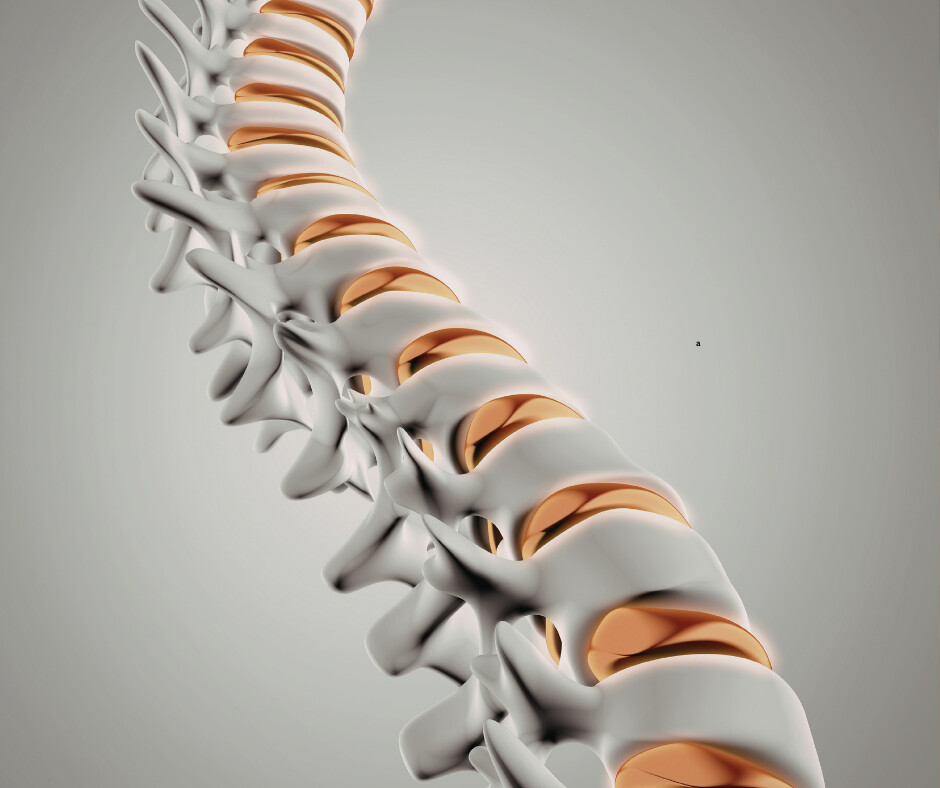
If you've ever had imaging done for back pain, there's a decent chance a provider handed you a report with the words "degenerative disc disease" on it.And if you're like most of the people I work with, that phrase hit you like a diagnosis of something serious. Something permanent. Something scary.So let's clear this up - because the way this term gets communicated to patients is one of the most consistent sources of unnecessary fear, overcaution, and long-term limitation I see in this field.
What It Actually Means
Degenerative disc disease is not a disease. It's a description of normal age-related changes in the spinal discs - the cushioning structures between your vertebrae. Over time, those discs lose some hydration, become slightly thinner, and may develop small tears or changes in shape. This happens to virtually everyone.Studies consistently show that the majority of people over 40 have disc changes visible on MRI - and most of them have no pain whatsoever. A 2015 study published in the American Journal of Neuroradiology found that by age 50, over 80% of asymptomatic adults showed disc degeneration on imaging. By 60, it's even higher.Read that again: most people with these changes on their MRI feel completely fine.
Why the Framing Matters So Much
Here's the problem. When a provider says "you have degenerative disc disease" without context, the patient hears: my spine is deteriorating, this will get worse, I need to be careful, I should probably stop doing active things, even if I love them. That framing is not just unhelpful - it's actively harmful. Research in pain science is clear that what you believe about your body directly affects how much pain you experience and how much you limit yourself. When people are told their spine is "worn down" or "damaged," they move less, they avoid exercise, and they enter a cycle of deconditioning that makes everything worse.I've seen this play out hundreds of times. Someone comes in convinced they're broken because of a report they got five years ago. They've been modifying every workout, avoiding anything that "puts stress on the spine," and wondering why they keep getting worse instead of better.
What the Research Actually Supports
Movement and load - done progressively and intelligently - are among the most powerful tools we have for managing disc-related back pain. Strong muscles support and offload the spine. Consistent activity keeps the structures nourished and functional. People who exercise regularly, including lifting, typically have better long-term outcomes than those who rest and restrict.This doesn't mean go lift heavy with no guidance. It means the goal should be rebuilding capacity, not avoiding it.
What I Want You to Hear
Your imaging findings do not determine your future. They are one piece of a much bigger picture - and often not even the most important piece. The most important factors are how you move, how strong you are, how consistently you train, and whether you have a plan that accounts for all of that.If you've been carrying around a diagnosis that's made you feel fragile, I want to challenge that story. Your body is more capable and more adaptable than that report suggests. No matter how long you've been dealing with this, there is a path forward - one that builds you up instead of just managing you down.
Ready to stop managing pain and start rebuilding? If you're an active adult in the Kansas City area who's tired of temporary fixes and wants a clear plan that actually works, I'd love to connect. Book a free consultation and let's talk about what's going on and whether this approach is the right fit for you.
→ Book your free consult at the top right of this page

