
.svg)
If you are an active adult dealing with back pain, knee pain, shoulder pain, or recurring injuries, you have probably heard this advice:
“Just rest.”
And to be fair, rest can calm symptoms temporarily.
But here is the problem.
Rest does not build capacity.
If you are a runner in Prairie Village, a CrossFitter in Overland Park, a golfer in Mission Hills, or someone who simply wants to stay strong in your 40s and 50s, your body does not need less demand forever. It needs the right amount of demand applied progressively.
Without that, you do not build resilience. You lose it.
The Rest Trap: Why Symptoms Improve but Performance Does Not
Here is what typically happens:
- You feel a flare up in your low back, knee, or shoulder.
- You stop training or drastically reduce activity.
- Symptoms calm down.
- You return to your previous level of activity.
- Pain returns.
This is the flare up to rest to flare up loop.
Rest decreases irritation.
But it also decreases strength, tendon stiffness, coordination, and load tolerance.
So when you return to running, lifting, or golf, your body is actually less prepared than it was before.
This is deconditioning.
And deconditioning does not create durable recovery.
What Active Adults Actually Need: Capacity Building
If you live an active lifestyle in Kansas City, your goal is not just to reduce pain. It is to:
- Run without fear of your back tightening up
- Lift weights without worrying about your shoulder
- Play 18 holes without next day neck stiffness
- Keep up with your kids without your knee flaring
That requires capacity.
Capacity is your body’s ability to tolerate load, volume, and intensity without breaking down.
In rehab based chiropractic and sports physical therapy, we call this graded exposure.
Graded exposure means:
- Identifying what you can tolerate right now
- Starting at that level
- Progressively increasing demand
- Allowing your tissues and nervous system to adapt
It is not aggressive.
It is not reckless.
It is strategic.
Rest vs Capacity: A Simple Compariso
Rest Focused Approach
- Goal is symptom elimination
- Activity decreases significantly
- Short term relief
- Lower long term tolerance
- Recurrent flare ups
Capacity Focused Approach
- Goal is resilience and function
- Activity is modified, not eliminated
- Gradual strength progression
- Higher load tolerance
- Fewer flare ups over time
If you are an active adult between 35 and 55, your body thrives on stimulus. The key is finding the right entry point and building from there.
What Graded Exposure Looks Like in Real Life
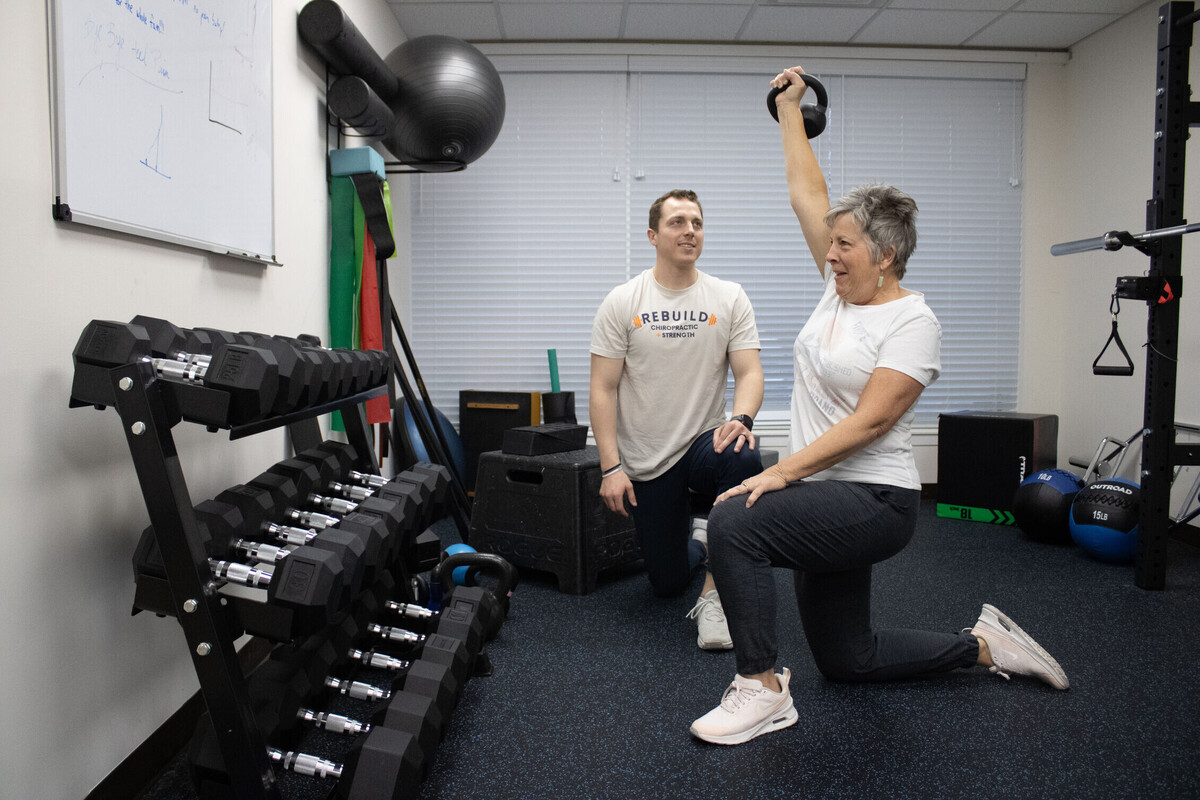
Let us say you have chronic low back pain that shows up when you bend over to load the dishwasher or pick up your kids.
A rest based model would say:
“Stop bending. Avoid lifting. Let it settle.”
A capacity based model would say:
- Can you hinge with lighter weight?
- Can you reduce the range of motion?
- Can you slow the tempo?
- Can we improve hip mobility and distribute load better?
Instead of removing bending from your life, we find a tolerable version and build it.
The same applies to:
- Runner with Achilles tendon pain
- CrossFitter with shoulder pain during overhead lifts
- Golfer with neck stiffness after 9 holes
- Pickleball player with knee pain
The solution is rarely complete avoidance. It is progressive reloading.
Why This Matters for Long Term Health and Performance
Pain is not just about damaged tissue. It is often about tolerance.
If your tissues, joints, and nervous system are not conditioned for the demands you place on them, symptoms show up as a warning sign.
When you build strength, mobility, and motor control progressively:
- Tissues become more robust
- Movement becomes more efficient
- Confidence increases
- Fear decreases
- Flare ups become less frequent and less intense
This is how you break the boom bust cycle.
Not by doing less forever.
But by doing the right amount consistently.
If You Are an Active Adult in Kansas City Dealing With Chronic Pain
At Rebuild Chiropractic and Strength, we work with runners, CrossFitters, golfers, and active adults across Prairie Village, Mission, Overland Park, and the greater Kansas City area.
Our focus is not just pain relief.
It is:
- Strength training for back pain
- Load management for runners
- Shoulder rehab for CrossFit athletes
- Knee pain rehab for active adults
- Long term resilience, not short term relief
We modify movements.
We track objective progress.
We build capacity step by step.
Because the goal is not to rest your way to health.
The goal is to rebuild your body so it can handle real life and training again.
The Bottom Line
Rest can reduce symptoms.
But graded exposure builds resilience.
If you are tired of the flare up to rest to flare up loop, it may be time for a different approach.
One that respects pain.
But does not fear load.
And progressively builds the strength and tolerance your body actually needs.
If that sounds like you, the next step is a conversation about where your current capacity is and how we can safely build it.
Your body does not need less life.
It needs better preparation for it.

